
Flute rentals for school band in New York City and Connecticut.
School-year rental
Rent to own (A Line)
Teacher-endorsed
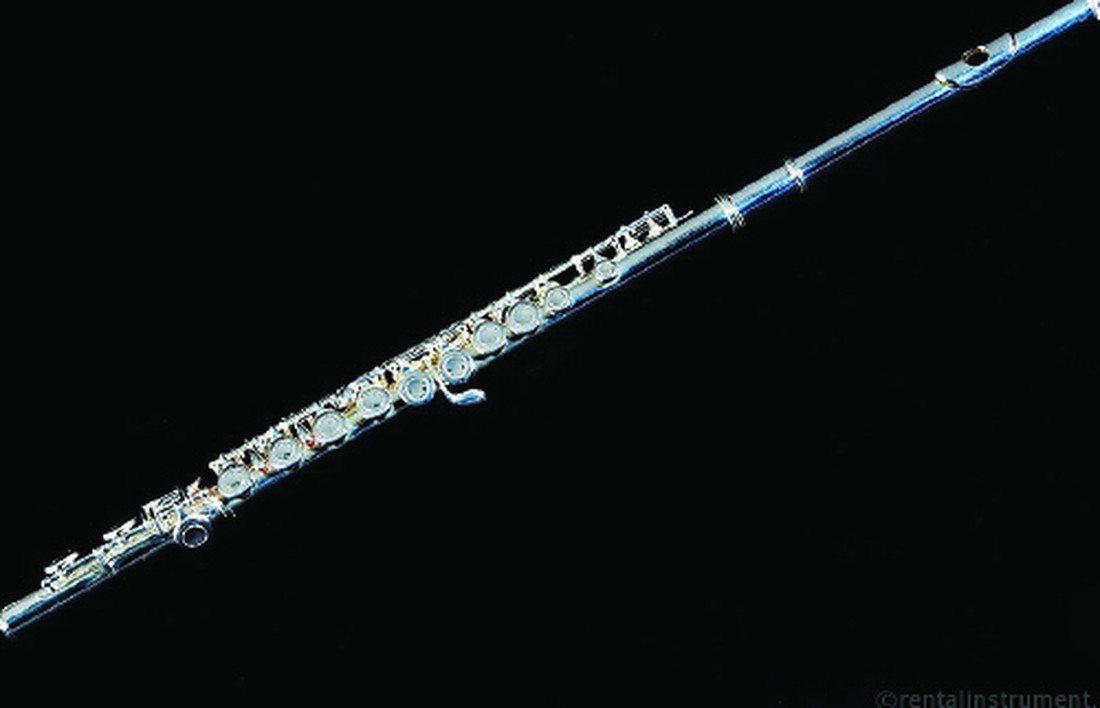
A student flute has to do one thing above all: let a beginner get a sound out of it. Ours is set up for exactly that, closed hole, offset G, silver-plated, and it’s the flute a professional flutist on our roster uses for all her own teaching.
Our four flute lines
Every flute we rent goes out ready to play. The lines are not ranked against each other. They differ in what the instrument is, not in how it is cared for. More about our band instruments and lines.
A Line: our house flute, brand new
Brand new, still sealed from the factory. Never played, never rented, not a scratch on it. Our house flute is built to specifications we set, written to match or exceed what the major brands put into their student models.
It is built on the same student designs the big-name brands use, in the same manufacturing world that now builds for the famous names too, and our own musicians vetted the model before we stocked it.
Rent it for three school years and it is yours to keep. It carries no brand marking, which is deliberate: once the instrument belongs to your family it should not be stamped with the name of the company you rented it from.
B Line: the name brands
Before house instruments existed, this is what every shop rented, and it is still what many families picture: a recognized manufacturer with a familiar name on the bell. Some directors ask for one specifically.
These have been played before, and they are well-known brands like Gemeinhardt and Yamaha. We buy them individually rather than by the crate, and each one is restored on our bench and inspected before it goes out again.
If your director has asked for a particular manufacturer, tell us and we will say what we have and what we can find.
C Line: our house flute, restored
The same house flute as our A Line, back from a previous rental and rebuilt by our technicians. A technician sits with each one and makes the playability adjustments a factory production line does not stop to make.
It is the least expensive way to get a student started. If you are collecting at our shop and would rather have a different one, say so and we will swap it while you are there.
Premium Yamaha Line: Yamaha YFL-221
Among brand-name instruments, Yamaha is the standard, and the YFL-221 is the model school flute programs most often specify.
A limited collection, and it does not restock quickly. If a Yamaha is specifically what you want, this is the way to be sure of getting one.
Not sure which to choose?
Choose A Line if you want a new instrument and intend to own it after three years.
Choose B Line if you or your director want a recognized manufacturer.
Choose C Line if your priority is the lowest cost to get a student started.
Choose the Premium Yamaha Line if a Yamaha is specifically what you want.
These are suggestions rather than requirements. Call us and we will tell you what is currently in stock in each line.
Rent for three years and the flute is yours to keep.
Keep an A Line rental going for three years and the flute becomes yours for life, with no balloon payment and no buyout decision to agonize over. Want to own it sooner? You can purchase at any point with a 10% discount on the remaining balance. And if your student moves on to something else after a year, you simply return it.
A Line only · Yours after 3 years · Also on clarinet, trumpet, trombone, alto & tenor sax, baritone and French horn
About our house flute, and what the specs actually mean
A Line and C Line are the same instrument, our house flute, new or restored. It’s silver-plated, closed hole, offset G, with a C foot joint. If that means nothing to you, here’s the translation, and why each choice is the right one for a student.
Closed hole
The keys are solid rather than having holes in the middle. A beginner’s fingers don’t have to cover a hole perfectly to get a note, which removes one of the biggest early frustrations. Open-hole flutes are for advanced players.
Offset G
The G key sits slightly out from the row, so the left hand rests naturally instead of stretching. It matters most for younger students with smaller hands, and it’s what nearly every teacher specifies for a beginner.
C foot joint
The standard student length, going down to middle C. It’s shorter and lighter than a B foot, which keeps the flute balanced for a smaller player, and covers every note in school band music.
Hear the flute played.
Professional flutist Sharon Levin demonstrates the flute your student would rent, across all three registers.
★★★★★
“It is easy for a beginner to make a sound on this flute and then continue with a good sound going forward. The flute is sturdy and reliable, no maintenance worries. Over time it has held up superbly and I now do all my teaching with this flute.”
Sharon Levin
Professional flutist and teacher
Everything your student needs for day one of band.
Whichever line you choose, the rental arrives complete, and unlike clarinet or saxophone, a flute has no reeds to buy.
- The flute, new or shop-restored, depending on your line
- Hard case
- Cleaning stick (swab rod)
- Name tag
You’ll want a soft cleaning cloth for the inside and a separate one for the outside, most band directors ask for these anyway.
Looking after a flute.
Flutes are low-maintenance compared to reed instruments, but the pads and the delicate keywork are what we see damaged. Both are easy to protect.
Every time it goes back in the case
- Swab the inside with the cleaning stick after every use, moisture left inside deteriorates the pads, which is the most common flute repair.
- Use two different cloths. Never clean the inside and outside with the same one.
- Take it apart and put it back in the case. Assembled flutes left out get knocked over.
- Clean, dry hands before handling, skin oils tarnish the plating.
The mistakes that cost money
- Never grab the keys when assembling. Hold the smooth edges of each joint and twist gently. Gripping the keywork bends rods, the single most common flute damage we repair.
- Skip the metal polish. It damages the finish and gets into the pads. Never use it.
- Don’t oil it. Lubricating a student flute isn’t necessary and does more harm than good.
- Keep it at room temperature. Not a hot car, not a freezing one.
Flute rental questions
Answered by the luthiers and technicians who repair these every day. Browse all flute questions.
How do I clean a flute?
Swab the inside with the cleaning rod after every single session. Not weekly. Every time. Moisture left in the tube is what ruins pads, and it is also why some flutes come back to our bench smelling like last week's lunch. That smell is bacteria, and every one of those flutes belonged to a student who skipped the swab.
My child can’t get a sound out of the flute. Is it broken?
Almost certainly not broken. With no reed doing the work, most beginners take days or even a couple of weeks to make a first sound, and the fastest route there is practicing on the headjoint alone. This is the flute's particular hurdle, and it catches every beginner.
What’s the most common avoidable damage you see?
Five habits would prevent most of it: use a sturdy case and treat carrying the cello as part of playing it, run a humidifier in winter, oil brass valves and grease the slides, grease clarinet corks before assembly, and swab the flute every time. Here is what we see when those don't happen.
My child’s teacher is skeptical of an instrument with no brand name on it.
That is a reasonable instinct, and we would rather a teacher raised it than said nothing. Instruments do turn up in school music rooms that arrived from an online seller and cannot be played properly, and a teacher who has spent a term working around those has good reason to look twice at a name they do not recognize. The answer is not to argue about it. Bring the instrument in, or ask the teacher to call us, and one of our musicians will play it in front of you. If something is wrong we will correct it or exchange it. If it is fine, you will hear that for yourself.
What condition are your band instruments in?
It depends on the line. A Line instruments are brand new, and they arrive with everything new, mouthpiece included. B Line and C Line instruments have been played before. Each of those is stripped down and restored on our bench, then inspected by a professional player or teacher before it goes out, which is the same check we run on every instrument we rent. Anything damaged is replaced rather than passed along, and a cracked or chipped mouthpiece never goes out under any circumstances.
Questions every rental family asks
Should we rent or buy our child’s first instrument?
Rent, in almost every case: beginners can't yet handle an instrument safely, children outgrow sizes and switch instruments, and renting turns those surprises into a phone call instead of a buying mistake. And we would say that even if we didn't rent instruments.
What happens if my child quits after a few months?
Then you return the instrument. That is the whole point of renting instead of buying, it happens in every school year, and nobody here will make it awkward.
Will I be charged for normal wear and tear?
No, not for normal wear: strings wearing out, rosin used up, bow hair breaking strand by strand, a case zipper giving out. That is expected, and it is never charged to you. Damage is different: dents, cracks from drops, a broken bow, carved initials. We always tell you which side of the line we think something sits on before any chargeable work happens, and the insurance exists for the genuine accidents and the gray areas.
Ready to rent a flute?
Start the rental online and we’ll follow up within one business day. Free delivery to schools across Connecticut and New York in the fall. Nothing is charged until we confirm.