
Saxophone rentals for school band in New York City and Connecticut.
School-year rental
Rent to own (A Line)
Alto & tenor saxophones
Alto is where nearly every band student starts, and it’s what we stock deepest. Three lines to choose from, a brand-new house saxophone you can rent to own, or a shop-restored brand-name or house horn at a lower rate. Every one is cleaned, sanitized, and play-tested before it goes out.
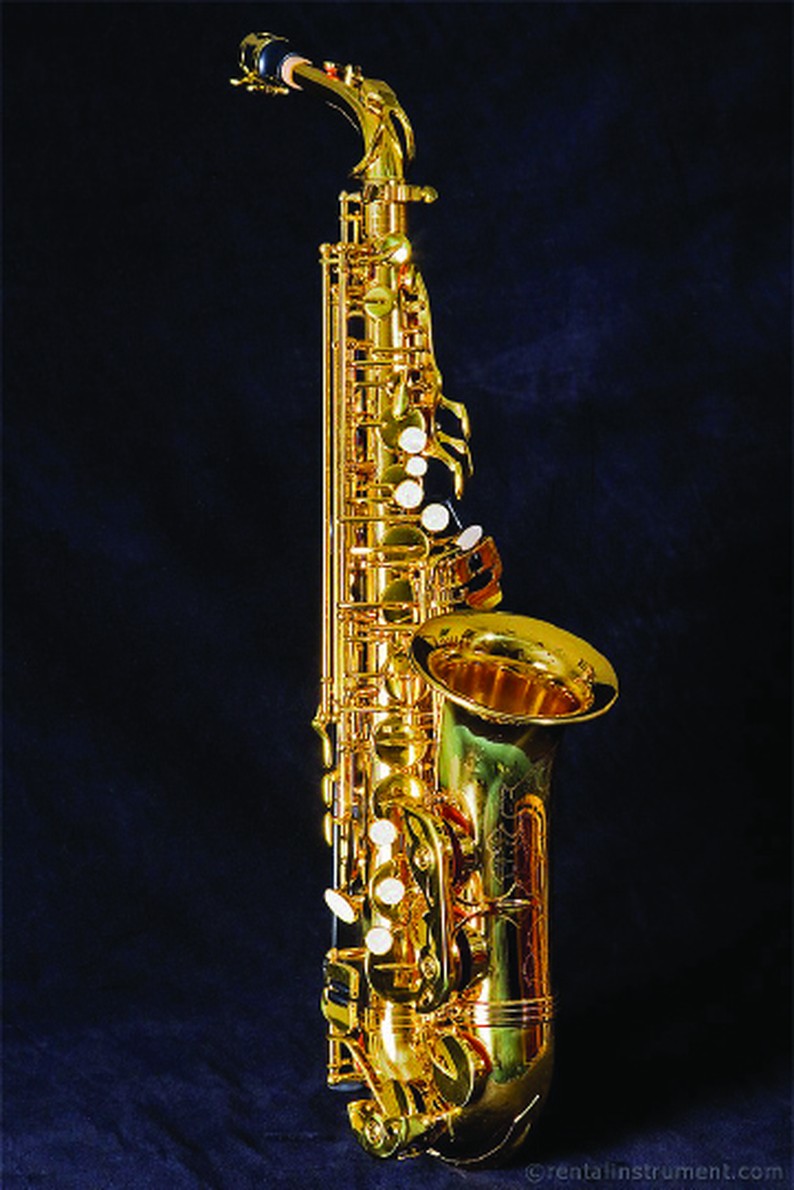
Our four alto sax lines
Every alto sax we rent goes out ready to play. The lines are not ranked against each other. They differ in what the instrument is, not in how it is cared for. More about our band instruments and lines.
A Line: our house alto sax, brand new
Brand new, still sealed from the factory. Never played, never rented, not a scratch on it. Our house alto sax is built to specifications we set, written to match or exceed what the major brands put into their student models.
It is built on the same student designs the big-name brands use, in the same manufacturing world that now builds for the famous names too, and our own musicians vetted the model before we stocked it.
Rent it for three school years and it is yours to keep. It carries no brand marking, which is deliberate: once the instrument belongs to your family it should not be stamped with the name of the company you rented it from.
B Line: the name brands
Before house instruments existed, this is what every shop rented, and it is still what many families picture: a recognized manufacturer with a familiar name on the bell. Some directors ask for one specifically.
These have been played before, and they are well-known brands like Selmer, Yamaha, and Jupiter. We buy them individually rather than by the crate, and each one is restored on our bench and inspected before it goes out again.
If your director has asked for a particular manufacturer, tell us and we will say what we have and what we can find.
C Line: our house alto sax, restored
The same house alto sax as our A Line, back from a previous rental and rebuilt by our technicians. A technician sits with each one and makes the playability adjustments a factory production line does not stop to make.
It is the least expensive way to get a student started. If you are collecting at our shop and would rather have a different one, say so and we will swap it while you are there.
Premium Yamaha Line: the Yamaha YAS series
Among brand-name instruments, Yamaha is the standard, and the YAS series is what school saxophone programs most often specify. Model YAS-23, YAS-280 or YAS-200AD depending on availability.
A limited collection, and it does not restock quickly. If a Yamaha is specifically what you want, this is the way to be sure of getting one.
Not sure which to choose?
Choose A Line if you want a new instrument and intend to own it after three years.
Choose B Line if you or your director want a recognized manufacturer.
Choose C Line if your priority is the lowest cost to get a student started.
Choose the Premium Yamaha Line if a Yamaha is specifically what you want.
These are suggestions rather than requirements. Call us and we will tell you what is currently in stock in each line.
Rent for three years and the saxophone is yours to keep.
Keep an A Line rental going for three years and the saxophone becomes yours for life, with no balloon payment and no buyout decision to agonize over. Want to own it sooner? You can purchase at any point with a 10% discount on the remaining balance. And if your student moves on to something else after a year, you simply return it.
A Line only · Yours after 3 years · Also on alto and tenor sax, flute, clarinet, trumpet, trombone, baritone horn and French horn
Alto or tenor: which saxophone should my child play?
In almost every case the band director decides, and in almost every case the answer for a beginner is alto. Here’s why, and when tenor comes into it.
Alto: start here
The beginner standard, and what school programs stock music for. It’s light enough for a fifth grader to hold, the key spacing suits smaller hands, and it takes less air than the bigger horns. Unless a director says otherwise, rent alto.
Tenor: usually a switch, not a start
Bigger, heavier, lower, and the sound most people picture when they think “saxophone.” Directors typically move a student to tenor in middle or high school, often for jazz band. We rent tenors too, see tenor saxophone rentals.
Everything your student needs for day one of band.
Whichever line you choose, the rental arrives complete, no extra trip to a music store before the first rehearsal.
- The saxophone, new or shop-restored, depending on your line
- Hard case
- Mouthpiece and ligature
- Reed
- Neck strap
- Cleaning swab and cork grease
- Name tag
Reeds are a consumable, your student will go through them, so plan on picking up a box once the first one wears out.
Reeds: the thing nobody explains to band parents.
The reed is the thin piece of cane that clips onto the mouthpiece and actually makes the sound. It’s also the single most common reason a saxophone “stops working”, and almost never an instrument problem.
- Reeds wear out and they chip. A cracked or chipped reed makes the sax squeak, honk, or refuse to sound. Before you assume the horn is broken, try a fresh reed.
- Each size sax takes a different reed. An alto reed will not work on a tenor. Buy reeds labeled for the instrument your student actually plays.
- They come in strengths. Beginners usually start around 2 or 2½, softer reeds are easier to blow. Your band director will tell you which they want; follow them over anything else.
- Take the reed off after playing and store it in a reed case to dry flat. Left on the mouthpiece it warps and grows mold.
- Keep a spare in the case. Reeds break at the worst times, usually right before a concert.
Two minutes of care after every practice.
Moisture and mishandling are what damage a saxophone. Both are easy to avoid.
Every time it goes back in the case
- Swab out the body and neck. Pull the swab through to clear the moisture that collects inside while playing.
- Take the reed off and store it in a reed case to dry.
- Wipe down the outside with a soft cloth, fingerprints etch the lacquer over time.
- Cap the mouthpiece and latch the case. The case is the safest place for it.
The mistakes that cost money
- Never pick the saxophone up by the neck. This is the big one. The neck bends, and a bent neck is a real repair. Lift it by the body.
- Don’t lean it against a chair. Saxophones fall over and keys bend. Use a stand or lay it in the case.
- Go easy on cork grease. A little when the neck cork feels dry; over-greasing weakens it.
- Bring it in if a key sticks or a pad leaks. Small adjustments are free and quick, a leaking pad makes a sax feel impossible to play.
Saxophone rentals in New York City
We supply saxophones to school music programs across Manhattan and deliver into the city, and we work with a number of private schools on institutional rentals, if your child’s school already rents from us, your instrument can go straight to the classroom.
We also handle short-term saxophone rentals for performing musicians in New York City, players flying in for a gig, a session, or an audition who can’t travel with their horn. Those are quote-based and priced by the week, though we’ll rent for as little as a single day. Tell us the dates and we’ll tell you what’s possible.
Our New York location is at 120 Riverside Boulevard, by appointment. Our workshop and full inventory are at 547 Main Avenue in Norwalk, Connecticut.
★★★★★
“The horn plays in tune through the low, middle and high octaves, and the action is quick and smooth. This is a responsive free-blowing horn that feels comfortable in your hands and is appealing to the ears, it will provide students with the quality student model instrument they need.”
Tony Marrone
Music Education BA, Berklee College of Music
Saxophone rental questions
Answered by the luthiers and technicians who repair these every day. Browse all saxophone questions.
My child has braces. Can they still play a brass or wind instrument?
Usually yes, but the honest answer is that it depends on the child, because every mouth is different and so are the braces. Most students play straight through, with orthodontic wax on the brackets and a few weeks of patience, and the orthodontist is worth asking alongside the band teacher. Traditional steel brackets, Invisalign, and lingual braces (mounted behind the teeth) each interact with a mouthpiece completely differently. Our founder had lingual braces and played trumpet without a problem. Another student with the same instrument and front brackets might have a rough month.
How do I clean a saxophone mouthpiece?
The whole job takes two minutes. Take off the reed and ligature, run the mouthpiece under warm (not hot) water with a drop of mild soap, work a mouthpiece brush through it (the small tapered brush made exactly for this), rinse, dry with a paper towel. Done. Weekly is plenty for a student. Hot water is the one real hazard: it warps the material, and a warped mouthpiece plays wrong forever.
My child is switching from alto to tenor saxophone. What changes?
Less changes than it looks: the fingerings are identical, so everything your child knows transfers, and what is new is physical, more air, different-sized reeds, and a neck strap that suddenly matters. It is one of the most common moves in school band, usually when a student joins jazz band or grows into wanting a bigger sound.
My child’s teacher is skeptical of an instrument with no brand name on it.
That is a reasonable instinct, and we would rather a teacher raised it than said nothing. Instruments do turn up in school music rooms that arrived from an online seller and cannot be played properly, and a teacher who has spent a term working around those has good reason to look twice at a name they do not recognize. The answer is not to argue about it. Bring the instrument in, or ask the teacher to call us, and one of our musicians will play it in front of you. If something is wrong we will correct it or exchange it. If it is fine, you will hear that for yourself.
What condition are your band instruments in?
It depends on the line. A Line instruments are brand new, and they arrive with everything new, mouthpiece included. B Line and C Line instruments have been played before. Each of those is stripped down and restored on our bench, then inspected by a professional player or teacher before it goes out, which is the same check we run on every instrument we rent. Anything damaged is replaced rather than passed along, and a cracked or chipped mouthpiece never goes out under any circumstances.
Questions every rental family asks
Should we rent or buy our child’s first instrument?
Rent, in almost every case: beginners can't yet handle an instrument safely, children outgrow sizes and switch instruments, and renting turns those surprises into a phone call instead of a buying mistake. And we would say that even if we didn't rent instruments.
What happens if my child quits after a few months?
Then you return the instrument. That is the whole point of renting instead of buying, it happens in every school year, and nobody here will make it awkward.
Will I be charged for normal wear and tear?
No, not for normal wear: strings wearing out, rosin used up, bow hair breaking strand by strand, a case zipper giving out. That is expected, and it is never charged to you. Damage is different: dents, cracks from drops, a broken bow, carved initials. We always tell you which side of the line we think something sits on before any chargeable work happens, and the insurance exists for the genuine accidents and the gray areas.
Ready to rent a saxophone?
Start the rental online and we’ll follow up within one business day. Free delivery to schools across Connecticut and New York in the fall. Nothing is charged until we confirm.