
Tenor saxophone rentals in New York City and Connecticut.
School-year rental
Rent to own (A Line)
Jazz band ready
Most students arrive at tenor by switching from alto, usually because a director wants them in jazz band. The good news for parents: the fingerings are the same, so the transition is far easier than it looks. Every tenor we rent is cleaned, sanitized, and play-tested before it goes out.
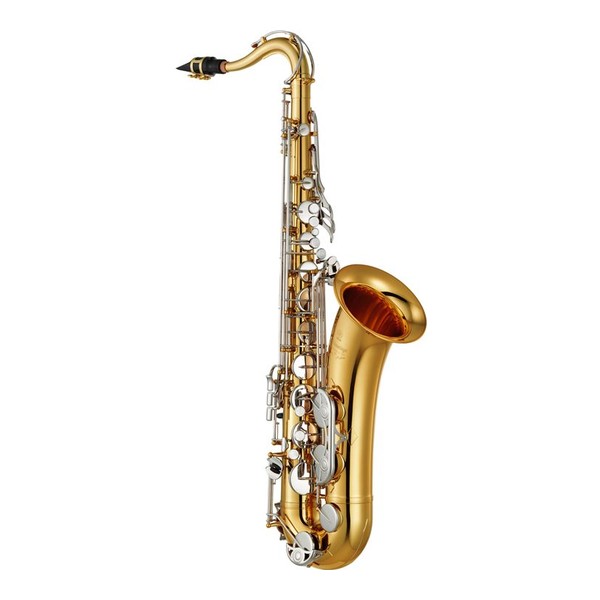
Our three tenor sax lines
Every tenor sax we rent goes out ready to play. The lines are not ranked against each other. They differ in what the instrument is, not in how it is cared for. More about our band instruments and lines.
A Line: our house tenor sax, brand new
Brand new, still sealed from the factory. Never played, never rented, not a scratch on it. Our house tenor sax is built to specifications we set, written to match or exceed what the major brands put into their student models.
It is built on the same student designs the big-name brands use, in the same manufacturing world that now builds for the famous names too, and our own musicians vetted the model before we stocked it.
Rent it for three school years and it is yours to keep. It carries no brand marking, which is deliberate: once the instrument belongs to your family it should not be stamped with the name of the company you rented it from.
B Line: the name brands
Before house instruments existed, this is what every shop rented, and it is still what many families picture: a recognized manufacturer with a familiar name on the bell. Some directors ask for one specifically.
These have been played before, and they are well-known brands like Selmer, Yamaha, and Jupiter. We buy them individually rather than by the crate, and each one is restored on our bench and inspected before it goes out again.
If your director has asked for a particular manufacturer, tell us and we will say what we have and what we can find.
C Line: our house tenor sax, restored
The same house tenor sax as our A Line, back from a previous rental and rebuilt by our technicians. A technician sits with each one and makes the playability adjustments a factory production line does not stop to make.
It is the least expensive way to get a student started. If you are collecting at our shop and would rather have a different one, say so and we will swap it while you are there.
Not sure which to choose?
Choose A Line if you want a new instrument and intend to own it after three years.
Choose B Line if you or your director want a recognized manufacturer.
Choose C Line if your priority is the lowest cost to get a student started.
These are suggestions rather than requirements. Call us and we will tell you what is currently in stock in each line.
Rent for three years and the saxophone is yours to keep.
Keep an A Line rental going for three years and the tenor becomes yours for life, with no balloon payment and no buyout decision to agonize over. Want to own it sooner? You can purchase at any point with a 10% discount on the remaining balance. And if your student moves on to something else after a year, you simply return it.
A Line only · Yours after 3 years · Also on alto sax, flute, clarinet, trumpet, trombone, baritone and French horn
Switching from alto to tenor: what actually changes
A director asks your alto player to move to tenor, and it sounds like starting over. It isn’t, the two horns are far more alike than they look.
- The fingerings are identical. Everything your student already knows transfers directly. This is the single most reassuring fact for a parent facing a switch, and it’s why directors move students between saxes so freely.
- It’s bigger and takes more air. The tenor is heavier and lower, and students often find their tone thin for the first few weeks while their breath support catches up. Normal, and it passes.
- The reeds are different. Alto reeds will not fit a tenor. Buy reeds labeled for tenor, and expect to start around a 2 or 2½ unless the director says otherwise.
- The neck strap matters more. A tenor’s weight hangs on the neck all rehearsal. A well-padded strap is worth the small cost, this is the one accessory we’d actually push you toward.
- Many students play both. Concert band on alto, jazz band on tenor, is a common pattern. Talk to us if you need two instruments, we’ll work something out.
Starting fresh rather than switching? Most beginners should start on alto, see alto saxophone rentals.
Everything your student needs to start.
Whichever line you choose, the rental arrives complete.
- The tenor saxophone, new or shop-restored, depending on your line
- Hard case
- Mouthpiece and ligature
- Reed
- Neck strap
- Cleaning swab and cork grease
- Name tag
Two minutes of care after every practice.
Same routine as an alto, with one difference: a tenor is heavier, so the mishandling risks are bigger.
Every time it goes back in the case
- Swab out the body and neck to clear the moisture that collects while playing.
- Take the reed off and store it in a reed case to dry flat.
- Wipe the outside with a soft cloth, fingerprints etch the lacquer over time.
- Cap the mouthpiece and latch the case.
The mistakes that cost money
- Never pick the saxophone up by the neck. The neck bends, and on a tenor there’s more weight to bend it. Lift by the body.
- Don’t lean it against a chair. A falling tenor bends keys and dents the bow. Use a stand or lay it in the case.
- Go easy on cork grease. A little when the neck cork feels dry; over-greasing weakens it.
- Bring it in if a key sticks or a pad leaks. Small adjustments are free and quick.
Tenor saxophone rental questions
Answered by the luthiers and technicians who repair these every day. Browse all tenor sax questions.
How do I clean a saxophone mouthpiece?
The whole job takes two minutes. Take off the reed and ligature, run the mouthpiece under warm (not hot) water with a drop of mild soap, work a mouthpiece brush through it (the small tapered brush made exactly for this), rinse, dry with a paper towel. Done. Weekly is plenty for a student. Hot water is the one real hazard: it warps the material, and a warped mouthpiece plays wrong forever.
My child is switching from alto to tenor saxophone. What changes?
Less changes than it looks: the fingerings are identical, so everything your child knows transfers, and what is new is physical, more air, different-sized reeds, and a neck strap that suddenly matters. It is one of the most common moves in school band, usually when a student joins jazz band or grows into wanting a bigger sound.
My child’s teacher is skeptical of an instrument with no brand name on it.
That is a reasonable instinct, and we would rather a teacher raised it than said nothing. Instruments do turn up in school music rooms that arrived from an online seller and cannot be played properly, and a teacher who has spent a term working around those has good reason to look twice at a name they do not recognize. The answer is not to argue about it. Bring the instrument in, or ask the teacher to call us, and one of our musicians will play it in front of you. If something is wrong we will correct it or exchange it. If it is fine, you will hear that for yourself.
What condition are your band instruments in?
It depends on the line. A Line instruments are brand new, and they arrive with everything new, mouthpiece included. B Line and C Line instruments have been played before. Each of those is stripped down and restored on our bench, then inspected by a professional player or teacher before it goes out, which is the same check we run on every instrument we rent. Anything damaged is replaced rather than passed along, and a cracked or chipped mouthpiece never goes out under any circumstances.
Do you rent Yamaha instruments?
Yes, two ways. Yamaha is one of the manufacturers in our B Line, along with Jupiter, Selmer, Buffet and Gemeinhardt. We also rent a Premium Yamaha Line on five instruments, in the specific models school programs most often specify: the YFL-221 flute, YCL-255 clarinet, YTR-2330 trumpet, YSL-354 trombone, and the YAS series alto saxophone. That line can be selected on the rental form. Supply is limited and does not restock quickly.
Questions every rental family asks
Should we rent or buy our child’s first instrument?
Rent, in almost every case: beginners can't yet handle an instrument safely, children outgrow sizes and switch instruments, and renting turns those surprises into a phone call instead of a buying mistake. And we would say that even if we didn't rent instruments.
What happens if my child quits after a few months?
Then you return the instrument. That is the whole point of renting instead of buying, it happens in every school year, and nobody here will make it awkward.
Will I be charged for normal wear and tear?
No, not for normal wear: strings wearing out, rosin used up, bow hair breaking strand by strand, a case zipper giving out. That is expected, and it is never charged to you. Damage is different: dents, cracks from drops, a broken bow, carved initials. We always tell you which side of the line we think something sits on before any chargeable work happens, and the insurance exists for the genuine accidents and the gray areas.
Ready to rent a tenor sax?
Start the rental online and we’ll follow up within one business day. Free delivery to schools across Connecticut and New York in the fall. Nothing is charged until we confirm.